Nice summary of eMTC, NB-IOT and EC-GSM-IOT in respective of their objectives , changes in 3GPP Release 13 and 14.
Showing posts with label 3GPP. Show all posts
Showing posts with label 3GPP. Show all posts
Sunday, 18 February 2018
Tuesday, 26 December 2017
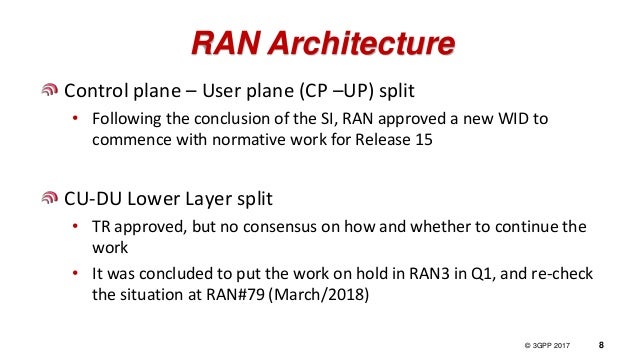
3GPP TSG focus on next year 2018...as compiled from RAN78 meeting report.
I alwayes batted for complete CU and DU split .....since last 2-3 years...though not caring much about technical inquisitives but more for next gen network obectives and its perceptives, 3GPP RAN meeting conclusion here as putted by RAN chairman.....include this for consideration ....
Excerpts from the meeting report and 3GPP RAN Focus for next years as well as release 16.
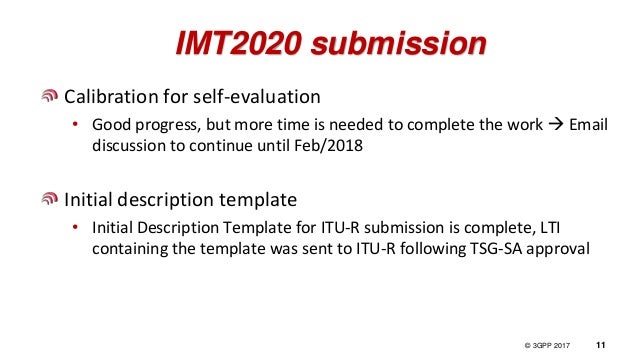
3GPP’s proposal for the IMT-2020 call from the ITU-R is on schedule. TSG RAN is currently planning a workshop, for October 2018, which will provide an insight on our 5G technology and provide detailed self-evaluation results (including simulation assumptions and calibration) of the 3GPP 5G proposal.
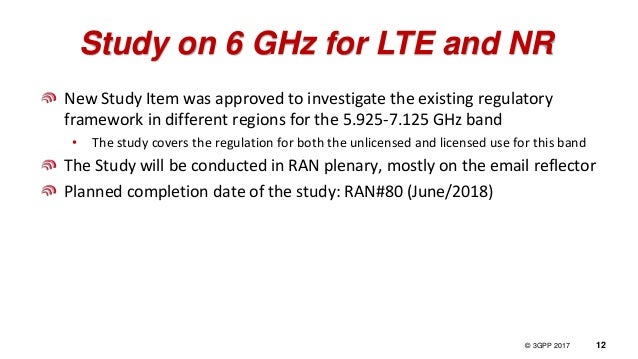
Strong Focus as expected would be on 6GHz....in next years working items.
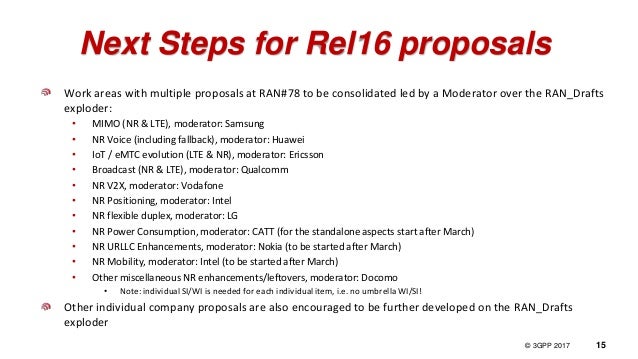
Future plan for Release 16.....
3GPP TSG going to have workshop next year october 2018.......
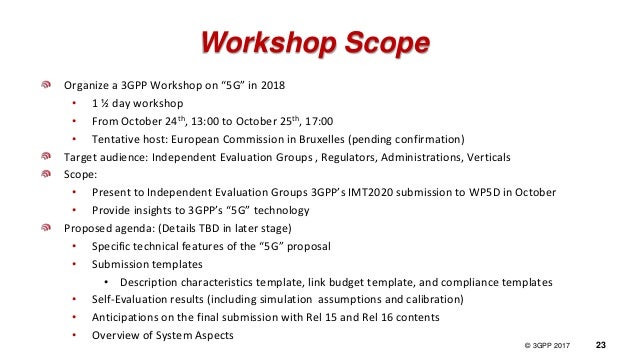
Deatail report is presented here ......
Monday, 22 May 2017
LTE-Basic Level understanding and technical insight.
Training on LTE basics for those still away from technical understanding on LTE, Just putting some introductory understanding of LTE technical insight,
Friday, 21 April 2017
Shall I be excited on 3GPP standardizing on 5G?
I found a 3G4G blog today on linked-in and found an interesting figure there, although i am aware of Non standalone architecture for NR (5G radio), also guess, I already written on it but my excitement prompted me to write more.
In 2013, I provided the architecture for wifi offload use case as an integration of Wi-Fi and LTE small cell at local level, using 3GPP LIPA standards. Given below in the figure....

This way was appreciated by then juniper CEO Mr kevin Johnson. But when I see, 5G standards are moving in same line, I find myself boosted.
I was also a strong supporter of convergence/aggregation at local level and finding that has also taking the important place in 5G network standards ( like MEC or edge).
What I found in BT present non standalone architecture for NR ...
As given here ,,,

This, I felt, resemble my own concept, at least on top level. Now the excitement bounces high with next figure...

The figure depicts the strict separation of control plane as with new node AMF/UPF and SMF. Which provide functionality of Access management, session management and user plane management. People who were in touch with me for last 3-4 years already knows, how i always advocated for complete separation of control and data plane. My blog is filled with this, those who follow knows.
Now at last, i just copy pasting from 3g4g blog, what my unknown friend Zahid has put there... may be creating more excitement on me.
Compared to LTE the big differences are:
In 2013, I provided the architecture for wifi offload use case as an integration of Wi-Fi and LTE small cell at local level, using 3GPP LIPA standards. Given below in the figure....

This way was appreciated by then juniper CEO Mr kevin Johnson. But when I see, 5G standards are moving in same line, I find myself boosted.
I was also a strong supporter of convergence/aggregation at local level and finding that has also taking the important place in 5G network standards ( like MEC or edge).
What I found in BT present non standalone architecture for NR ...
As given here ,,,

This, I felt, resemble my own concept, at least on top level. Now the excitement bounces high with next figure...

Now at last, i just copy pasting from 3g4g blog, what my unknown friend Zahid has put there... may be creating more excitement on me.
Compared to LTE the big differences are:
- Core network control plane split into AMF and SMF nodes (Access and Session Management Functions). A given device is assigned a single AMF to handle mobility and AAA roles but can then have multiple SMF each dedicated to a given network slice
- Core network user plane handled by single node UPF (User Plane Function) with support for multiple UPF serving the same device and hence we avoid need for a common SGW used in LTE. UPF nodes may be daisy chained to offer local breakout and may have parallel nodes serving the same APN to assist seamless mobility.
Also have my old blogs here too ....
&
Subscribe to:
Posts (Atom)